

Beyond the Boundary: BCCI's Brand Pivot and the Mobile Gaming Benchmark India

Published 2026-11-05 · By Varun Parekh (Chief Cricket & Analytics Editor · Jaipur Desk)
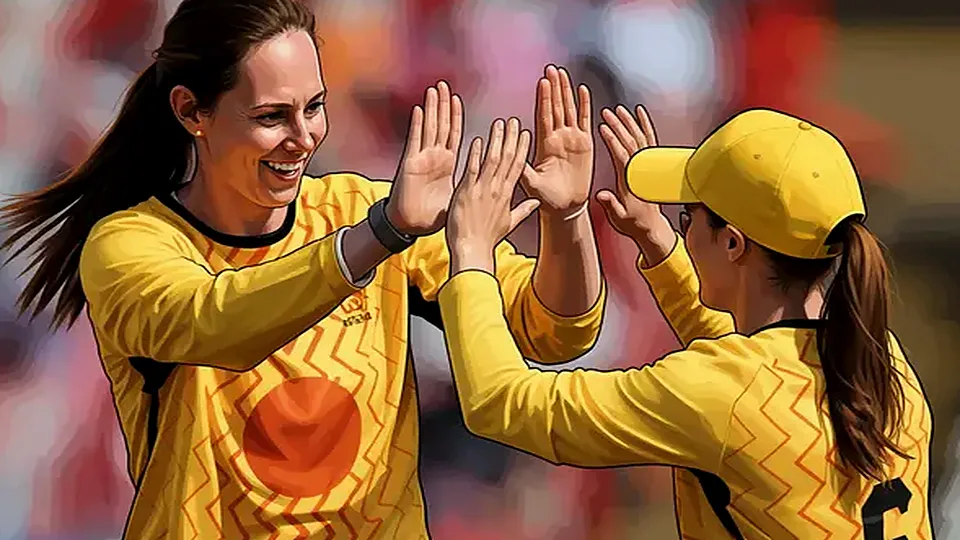
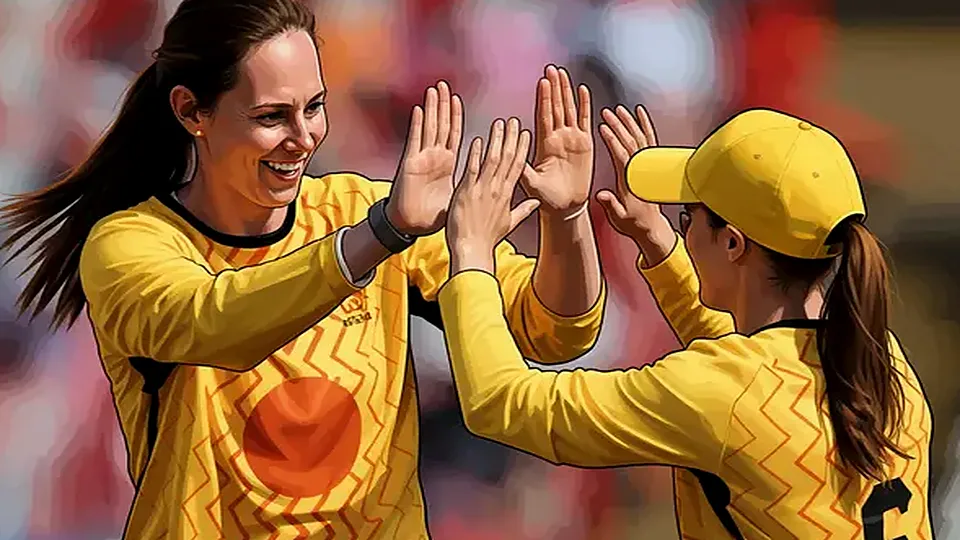
The dressing-room chatter has changed. It used to be about the skiddy hard length of a red-soil track or the dew factor after 8:30 PM IST. Now, it feels like the conversation is scripted elsewhere. You see it in the choreographed celebrations and the curated imagery that leaks out of the BCCI headquarters—a calculated alignment of the gentleman's game with a very specific, very loud political identity.
Cricket in India was always a religion. But the Board has decided to turn the temple into a political rally. The shift isn't subtle. It is a full-bore assault on the game's secular neutrality, replacing the old-school Ranji grind with a polished, saffron-hued spectacle designed for the Instagram era.
The Boardroom's New Playbook
For years, the BCCI operated as a shadow state. They played the government, the ICC, and the sponsors against each other to hoard the loot. But the current regime has traded that strategic ambiguity for a cozy seat at the high table of power. The result? A cricket culture where loyalty to the ideology is becoming as important as a boundary-percentage.
We are seeing the 'nationalist' narrative weaponized. When a player slips up, the trolls—often operating with a level of coordination that suggests a central command—descend. If you don't fit the image of the 'New India' warrior, you are a liability. It is a dangerous game. Cricket thrives on the fringes, the rebels, and the outliers. You cannot manufacture passion through a press release.
Gamifying the Fan Experience
While the ideology shifts on the field, the monetization is moving into the palm of your hand. The BCCI isn't just selling tickets; they are selling an ecosystem. Look at the surge in fantasy leagues and official apps. The current mobile gaming benchmark India is seeing isn't just about graphics or latency—it is about how deeply a sport can integrate into a user's daily digital habit.
The Board knows that a teenager in Jaipur or Indore cares less about the history of the Lord's pavilion and more about their virtual squad's performance. By aligning the game with a high-octane, nationalist identity, they make the product 'stickier'. The game becomes a tool for identity politics, and the app becomes the delivery mechanism.
The Cost of the Spectacle
What happens to the actual cricket? We are seeing a middle-overs choke in the intellectual discourse of the sport. The nuance is gone. It is all binary now: you are either with the vision or against it. The Impact Player gamble in the IPL is a tactical tweak, but the 'Impact' the BCCI is chasing in the social sphere is far more permanent and far more corrosive.
"The game used to be the only thing that could silence a billion arguments. Now, the game is just another argument."
The danger is the erasure of the game's inherent plurality. Cricket was the one place where the regional divide vanished. Now, we are introducing new lines of demarcation. The bowling at the death is stressful enough; we don't need the cultural climate to be just as volatile.
The Final Over
The Board will point to the revenue. The numbers are astronomical. The reach is global. But profit is a poor substitute for integrity. When the sport becomes a vehicle for a specific political project, it ceases to be a game and becomes a propaganda wing.
The fans might be distracted by the flashing lights and the mobile gaming benchmark India is currently chasing, but the soul of the game is leaking out. You can paint the stadium any color you like. But once the spirit of the game is compromised, no amount of marketing can buy it back. The new ball did the talking for a while. Now, the silence from the critics is the loudest sound in the stadium.
Related coverage
- India Bowl First, Spin‑Bomb Nabi‑Kamboj Duo Set; NZ Re‑activate Seifert After Conway Blow
- Asian Games Cricket: New Mobile Gaming Benchmark India Tests for Wicket-Keepers

Updated 2026-11-05 · Instant Rupee Deposits & 60s Withdrawals · 24/7 Support.
Access Official JGSStudio Portal →Live Match Metrics Lead · Pune Desk
Sakshi Kulkarni heads the statistical modeling desk at JGSStudio in Pune. She specializes in ball-by-ball telemetry, historical chart patterns, and data verification for mobile gaming benchmark india.
Reader Discussion & Match Reactions (7)4.8★ Community (7 Comments)
Verified Indian cricket reader perspectives & tactical debate on jgsdesignllc.com
The article mentions the old-school Ranji grind being replaced by spectacle, but it ignores the grassroots state associations where actual talent pipelines still exist. If BCCI cuts the 150-over format for 'efficiency', who are they grooming for the next generation of spinners from upcountry regions?
They cite 'boundary-percentage' as the new KPI, yet zero data on economy rates or dot-ball frequency in the current domestic circuit. Without that telemetry, how do you defend a selector choosing a batter over a middle-overs bowler? The metric set is completely skewed toward volume over value.
If the Board is policing ideology, where do players who dissent on social media stand? The 'central command' of trolls they describe is terrifying. We risk losing not just cricketers, but the independent voices that used to keep the game accountable in the dressing room.
The 'curated imagery' leaks the article mentions are just marketing, but they overlook the SMAT pathways in smaller states. Real development happens in the nets, not the BCCI headquarters. If they only scout Instagram stars, we lose the hard work done by district-level coaches in Assam and Bihar.
They obsess over strike rates but ignore the cost of a century in the T20 era. A 150 SR against 4 overs is useless if the team collapses after the middle overs. The article needs control metrics on power-hitting efficiency, not just raw boundaries, to judge the 'warrior' narrative.
Turning the temple into a political rally is a mistake for the game's integrity. If loyalty to the regime matters more than skill, we will see a decline in international performance. The 'New India' warrior image is a liability if the players are too afraid to fail on the field.
@Anirudh_Guwahati The point about the Ranji grind is critical because the article admits the Board is replacing it with spectacle. However, the 'polished saffron-hued spectacle' they describe is exactly what kills the non-mainstream performers you mention. Without the traditional format, state associations can't prove their value to the central board.